Bengkulu, a province on the western coast of Sumatra, played a significant role in Indonesia’s fight for independence. One of the key historical landmarks is the Exile House of Bung Karno, where Indonesia’s first president, Ir. Soekarno, was exiled by the Dutch colonial government from 1938 to 1942.
The Exile House of Bung Karno: A Living Historical Legacy
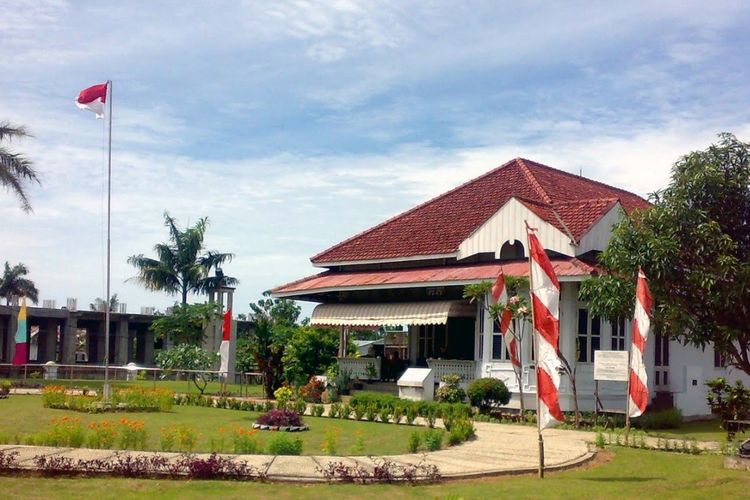
The Exile House of Bung Karno is located on Soekarno Hatta Street in Bengkulu City. Originally owned by Tan Eng Cian, a Chinese businessman supplying essentials to the colonial government, the house features colonial-style architecture, covering approximately 162 square meters, complete with a living room, bedroom, and a pavilion at the back.
During his exile, Bung Karno lived here with his wife, Inggit Garnasih, and adopted daughter, Ratna Djuami. Despite being under strict surveillance, he remained actively engaged with the local community, continuing his struggle through writings, correspondence, and social activities.
Bung Karno’s Influence in Bengkulu
In Bengkulu, Bung Karno was not only a political prisoner but also an inspiring leader. One of his most notable contributions was the renovation of Bengkulu’s Jamik Mosque, which he personally redesigned, transforming it into a symbol of unity and the spirit of resistance.
Additionally, Bung Karno encouraged Bengkulu’s people to resist colonial rule. He frequently held discussions and meetings with local figures, which later became an integral part of Indonesia’s independence movement.
The Exile House as a Historical Tourism Destination
Today, the Exile House of Bung Karno has been designated a cultural heritage site and serves as one of Bengkulu’s historical tourism destinations. Visitors can explore artifacts from Bung Karno’s exile, including his desk, books, and documentary photographs. This site is not only a reminder of his struggle but also an inspiration for future generations.
Preserving Historical Legacy
The Exile House of Bung Karno is a testament to the sacrifices and resilience that led to Indonesia’s independence. Preserving this site is a shared responsibility, ensuring that its historical values remain alive and are passed down to future generations.
Through the Exile House of Bung Karno, Bengkulu has made a profound contribution to Indonesia’s history. This landmark stands not only as a silent witness to the past but also as a beacon of hope and determination for the future.