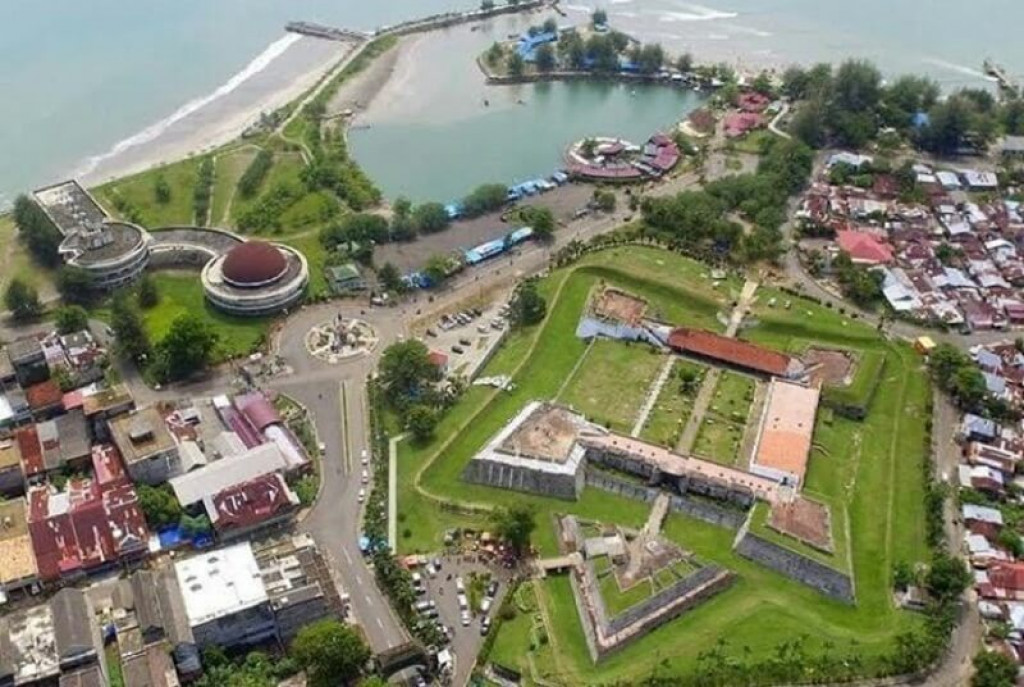
Standing tall and proud, facing the Indian Ocean, Fort Marlborough on the edge of Tapak Padri, Bengkulu City, is more than just an old fortress. It is a historical monument, defiantly confronting the passing of time—a marker of the past that still echoes in the silence of its stone walls.
Built by the British East India Company between 1714 and 1719, Fort Marlborough was the largest fort the British ever constructed outside India. Its strategic location, perched atop an 18-meter-high hill above sea level, reflected Britain’s intent to make it a central seat of power and trade along the western coast of Sumatra. From this fort, the British managed the flow of high-value commodities like pepper and spices, highly prized by the Western world.
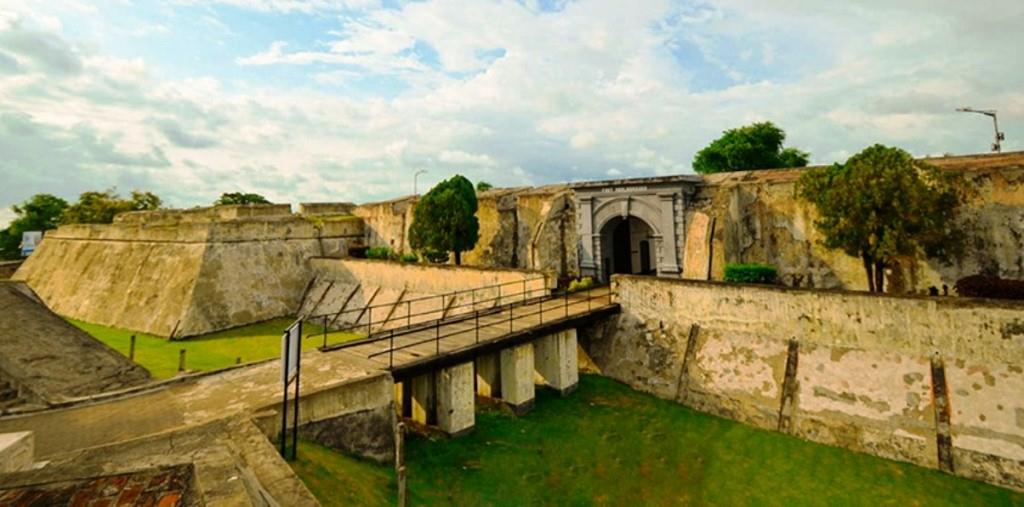
Yet, its history is not only one of triumph. In 1760, French forces briefly seized the fort from the British during a surprise attack. Though their rule was short-lived, the French left their mark: a dry moat was later constructed around the fort, standing 1.8 meters deep and nearly 3 meters wide. Unlike typical moats filled with water, this one was designed to slow down enemies and give British troops room to maneuver and defend.
The fort’s main entrance lies on the southwest side. It takes the form of a separate triangular structure, connected to the main fort by a bridge. Near this entrance are three graves—final resting places of key British figures, men who never returned to their homeland, now forever part of Bengkulu’s soil.
Originally serving as a trading headquarters, Fort Marlborough was topped with a traditional pitched roof, surrounded by loopholes for surveillance. Beneath the fort lie various chambers with different purposes: living quarters, a gunpowder warehouse, military prison cells, administrative offices, and guard rooms. All of this is laid out across an expansive area of 44,100 square meters, underscoring Bengkulu’s significance in British colonial trade strategy.
The year 1825 marked a turning point. Britain ceded Bengkulu to the Dutch under the Treaty of London. In return, the British acquired Singapore—a strategic move that would reshape the colonial map of Southeast Asia. Governor Thomas Stamford Raffles, who once served in Bengkulu, played a central role in this transition and is remembered today as the founder of modern colonial Singapore.
Now, more than three centuries later, Fort Marlborough is not merely a colonial relic. It is a silent monument to the complex ties between the British and the Malays of Bengkulu—a historical site rich with stories of cultural encounters, power struggles, and geopolitical change.
For anyone visiting Bengkulu, a walk through Fort Marlborough is a journey through time—a chance to grasp the fragments of history that shaped this coastal city. Within its thick stone walls, ancient tales still wait quietly to be retold.